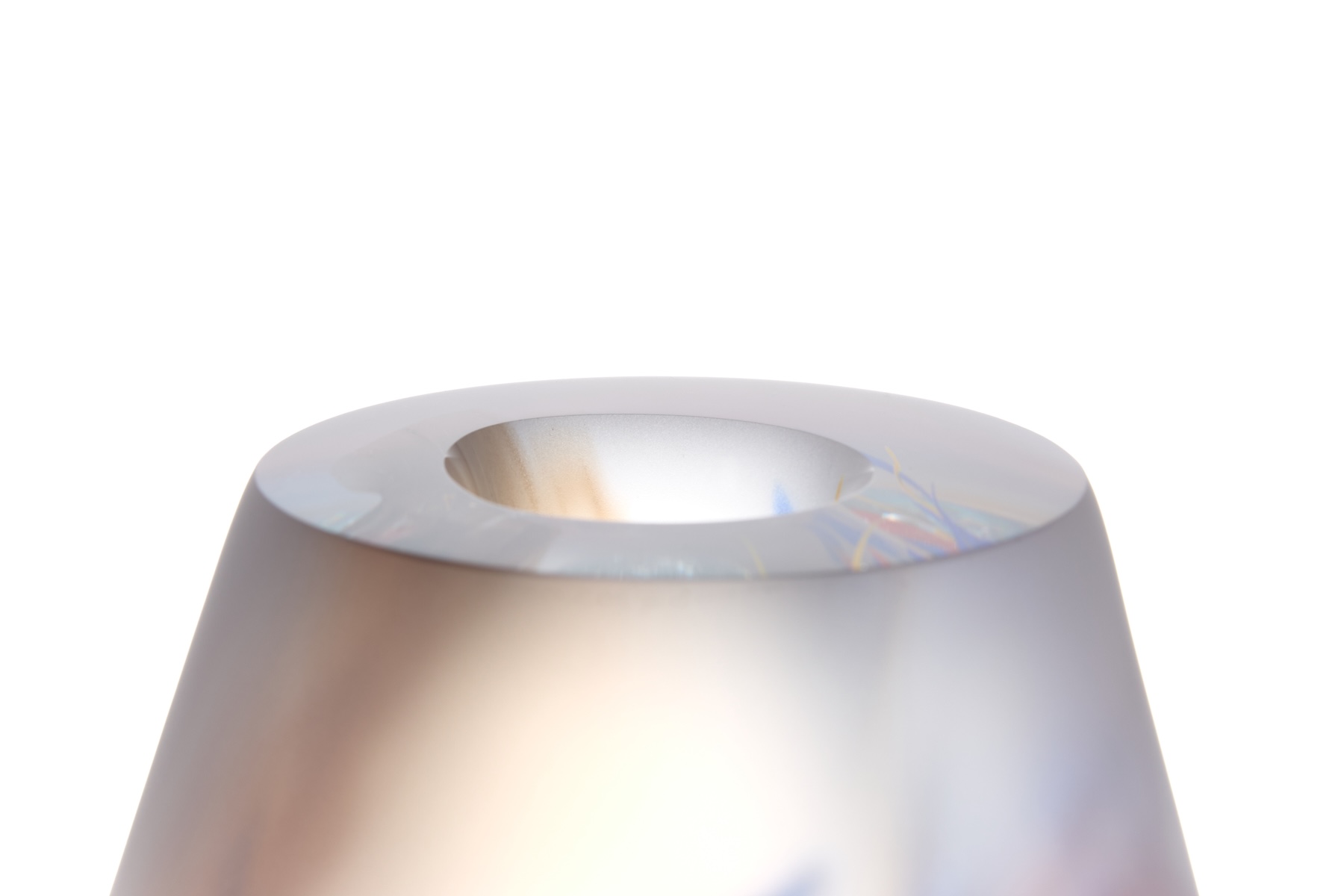
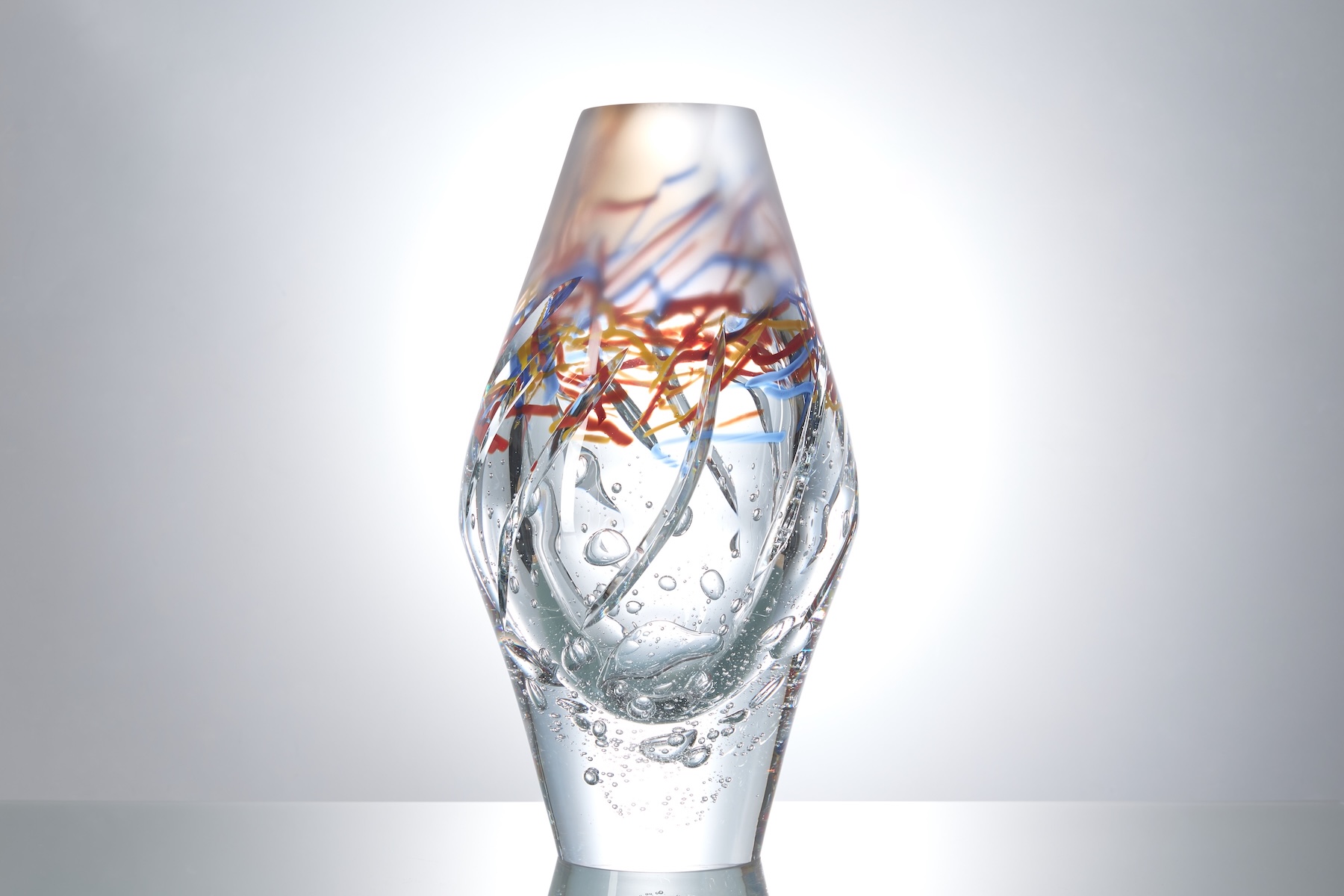
At this year’s Czech Design Week, the experimental glass object Radost (Joy) will be presented — a work created through the intersection of physiological data, generative artificial intelligence (AI) and traditional glassmaking. Can a human experience be preserved in a form other than memory, photography or words? This is the question that opens the exhibition by Martin Jakobsen, a PhD candidate at the Glass Studio of the Faculty of Multimedia Communications at Tomas Bata University in Zlín, at the Mánes Exhibition Hall. The work is based on an authentic life event — a moment of joy experienced during a children’s carnival. It is the outcome of artistic research exploring the potential of generative AI as an interpretive tool for translating physiological data into the design of a glass object. The source material included a time sequence of heart rate (HR), changes in heart rate variability (HRV), and a diary entry documenting the event. A generative AI model was then used as an interpretive instrument to search for relationships between this data and the resulting form of the object. “I wasn’t interested in whether AI could design a pretty vase. I wanted to find out whether it could expand the interpretation of human experience enough to become a meaningful part of the creative process. Here, glass is not merely the final material, but a medium that transfers digital information back into the physical world.” In the context of this year’s edition, dedicated to artificial intelligence, Joy offers an experimental perspective on collaboration between human and AI. Visitors will encounter an object created at the intersection of artistic research, physiological data, generative AI and traditional Czech glassmaking. The project was supported by the Internal Grant Agency of Tomas Bata University in Zlín.